If you have been following the mortgage market for the last three years, you know it has been a rollercoaster. After the aggressive rate hikes of 2022 and 2023, and the rate cuts of 2024 and 2025, we find ourselves in a new landscape. Now a lot of homeowners are asking themselves if it’s finally safe to take a variable rate mortgage in 2026.
As of December 2025, the Bank of Canada (BoC) has held its policy rate steady at 2.25%, leaving the prime rate at 4.45%. For the first time in years, variable mortgage rates are starting to look lower than fixed rates on paper.
But the scars of the recent past are fresh. Many Canadians are asking the same question: Is it finally safe to go variable again?
The Current Landscape: December 2025
To answer this, we have to look at where we stand right now. The Bank of Canada has signaled that the “heavy lifting” of rate cuts is likely over.
- BoC Policy Rate: 2.25%
- Prime Rate: 4.45%
- Typical 5-Year Variable: ~3.60% (Prime – 0.85%)
- Typical 5-Year Fixed: ~3.99% – 4.19%
Currently, you can get a variable rate mortgage that is roughly 0.40% to 0.60% lower than a comparable fixed rate. This is a reversal from last year when fixed rates were the clear “discount” option.
Take a look at our Mortgage Page.
The 2026 Forecast: The “Hold” Pattern
The consensus among economists for 2026 is stability, but with a few caveats.
Most major Canadian banks predict the BoC will maintain a “wait and see” approach for the first half of 2026. Inflation is hovering near the 2% target, but “core” inflation (excluding volatile food and energy) remains sticky around 2.5% – 3.0%.
The Three Scenarios for 2026:
- The Soft Landing (Most Likely): Rates stay flat at 2.25% for most of the year. Variable holders enjoy a lower rate than fixed holders for the entire term.
- The Recession Dip: If the economy weakens significantly in Q1/Q2 2026, the BoC might cut once more to 2.00%. Variable holders win big here.
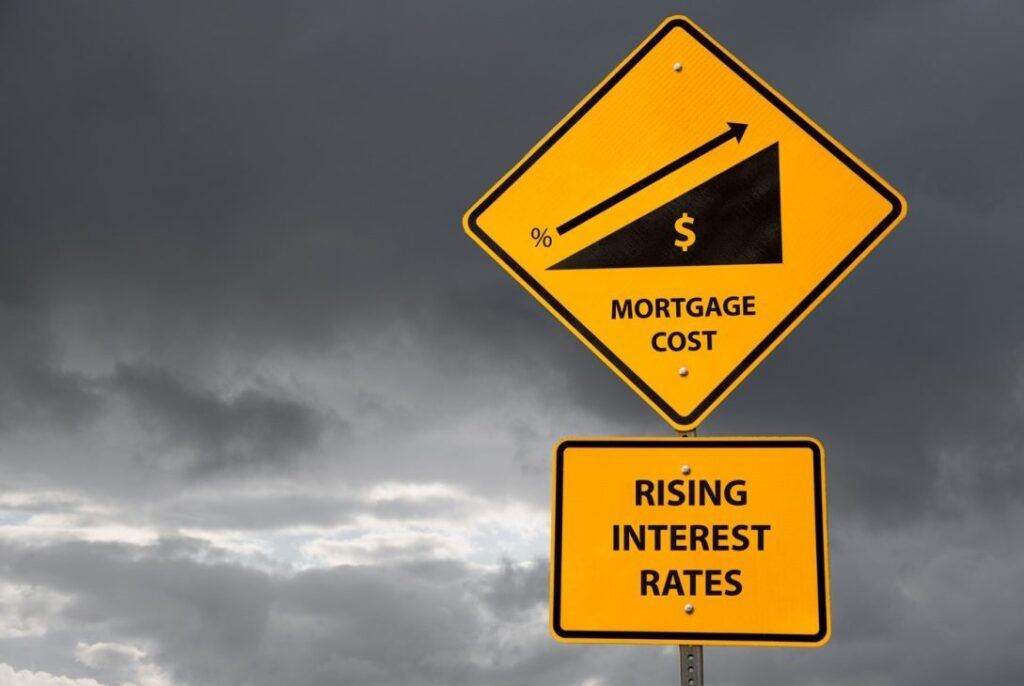
- The Inflation Rebound: If US trade policies (tariffs) or government spending reignite inflation, the BoC may be forced to hike rates back to 2.50% or 2.75% late in the year.

The Case for “Yes, It’s Safe” (The Pros) for a variable rate mortgage
Going variable in 2026 is a strategic financial move for three reasons:
1. Immediate Interest Savings With variable rate mortgage sitting in the mid-3% range and fixed rates pushing 4%, you save money from day one. On a $500,000 mortgage, a 0.50% difference saves you roughly $200 per month in interest immediately.
2. The “Recession Hedge” If Canada hits a recession in 2026—a real possibility given slowing GDP growth—variable rates are your insurance policy. In a recession, the Bank cuts rates to stimulate the economy. If you are locked into a fixed rate, you miss out on those savings.
3. The Penalty Advantage This is often overlooked. If you need to break your mortgage (to sell, refinance, or move) in 2026 or 2027, the penalty on a variable mortgage is usually just 3 months’ interest. On a fixed mortgage, you are subject to the Interest Rate Differential (IRD), which can be astronomically high (often $15,000+) if rates have dropped since you signed.
The Case for “Proceed with Caution” (The Cons) for a variable rate mortgage
While “safer” than before, variable rates are not risk-free.
1. The “Sticky” Inflation Risk We are not back to the near-zero rates of 2020. The “neutral” rate is higher now. If inflation ticks up to 3% again, the Bank of Canada will not hesitate to raise rates. Your payment could increase, or more of your payment could go toward interest rather than principal.
2. Fixed Rates Offer Sleep If you are renewing a mortgage from 2021 (when rates were ~1.8%), you are already facing a payment shock. Moving to a variable rate adds uncertainty to that shock. Locking in at ~4.00% provides a guaranteed budget for 5 years, which for many families is worth the slightly higher premium.
The Verdict: Who Should Go Variable in 2026?
Is it safe? Yes, but mostly for the financially resilient.
You should consider variable in 2026 if:
- You have a budget buffer: You can handle your interest rate rising by 0.50% (roughly $25 per $100k of mortgage) without panicking.
- You value flexibility: You might move or refinance in the next 3-4 years.
- You believe the economy is slowing: You think the Bank of Canada is more likely to cut than hike.
You should stick to fixed in 2026 if:
- You are at your max budget: You cannot afford any increase in monthly costs.
- You want to “set it and forget it”: You don’t want to follow Bank of Canada announcements every six weeks.
Final Thought: The “danger zone” of variable rates (2022-2023) appears to be behind us. The spread between fixed and variable has finally turned in favor of variable borrowers. However, in 2026, you aren’t betting on rates dropping to zero—you’re betting on them staying flat. If you can live with “flat,” variable is looking like the smart play again.